
Introduction
In the age of digital communication, tools that simplify how we connect are more valuable than ever. Among these tools is Google Voice, a service that promises to streamline calling, texting, and voicemail through a single platform. It’s marketed as a convenient alternative to traditional phone systems, especially for those who juggle multiple devices or prefer digital interfaces. But like all technology, it comes with its own set of strengths and weaknesses.
This article explores how Google Voice functions, what makes it appealing, and where it falls short for users looking for a robust communication solution.
How Google Voice Works
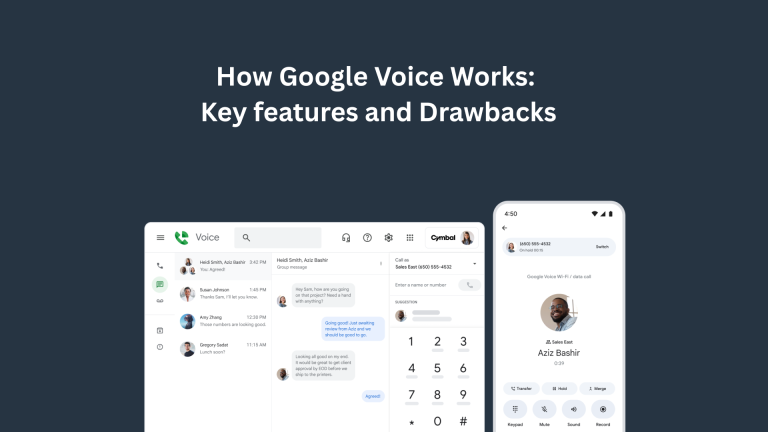
Google Voice operates by giving users a virtual phone number that can be linked to multiple devices. This number can send and receive calls, texts, and voicemails. When someone calls your Google Voice number, the service routes the call to your chosen devices, allowing you to answer from a computer, tablet, or smartphone.
All communication is managed through the cloud. This means your call history, voicemail recordings, and texts are accessible from any device with internet access. The technology behind Google Voice is based on VoIP (Voice over Internet Protocol), which allows voice calls to be transmitted through the internet rather than traditional telephone lines.
Google Voice also integrates with other Google services like Gmail and Google Calendar, allowing for easier scheduling and email access. Its web-based nature makes it ideal for people who spend a lot of time on desktops or prefer digital tools to handle their communication needs.
Key Features of Google Voice
The most compelling aspect of Google Voice is the ability to consolidate communication. With a single number, users can manage multiple lines of contact and maintain a consistent presence across different devices. Voicemail transcription is another popular feature, turning voice messages into text that can be read at convenience.
The service also offers call screening and spam filtering, giving users more control over who can reach them. Text messaging is available as well, though it functions primarily within the Google ecosystem and may lack some of the features found in dedicated messaging apps.
Google Voice allows call forwarding, international calling at competitive rates, and even the ability to block numbers. These features make it a versatile option for those looking to manage calls more efficiently without being tied to one device or network.
Drawbacks and Limitations
Despite its advantages, Google Voice has its limitations. One of the most noticeable is its dependence on a stable internet connection. Without reliable internet, the quality of calls may suffer, or the service may not work at all.
Another drawback is that while the system works well for basic calling and texting, it lacks advanced features found in dedicated business communication platforms. Call quality can vary, and users have reported occasional delays or dropped calls. Additionally, Google Voice’s support and documentation may not be sufficient for those who need quick problem resolution or advanced customization.
The platform also offers limited compatibility with services and carriers outside the Google ecosystem. This can be a challenge for users who want more flexibility or who need to integrate with other systems. Furthermore, while voicemail transcription is a useful tool, it’s not always accurate, especially with background noise or complex speech patterns.
Conclusion
Google Voice represents a step forward in digital communication, offering users a flexible, web-based tool to manage calls, texts, and voicemails. For individuals who are already immersed in the digital space and value convenience, it can serve as a helpful companion. However, its reliance on internet connectivity and limited feature set may not meet the needs of more demanding users or professional settings.
AtNew Eureka SL, we believe in evaluating technology not just for what it promises, but for how it performs in real-world conditions. Tools like Google Voice highlight the potential of digital communication, but they also remind us that every solution must be chosen with care. Whether you’re an individual looking to streamline your phone use or an organization exploring digital alternatives, understanding the capabilities and limits of your tools is essential for effective communication.